

Guntur Neurosurgical Research Advances Minimally Invasive Spine Surgery
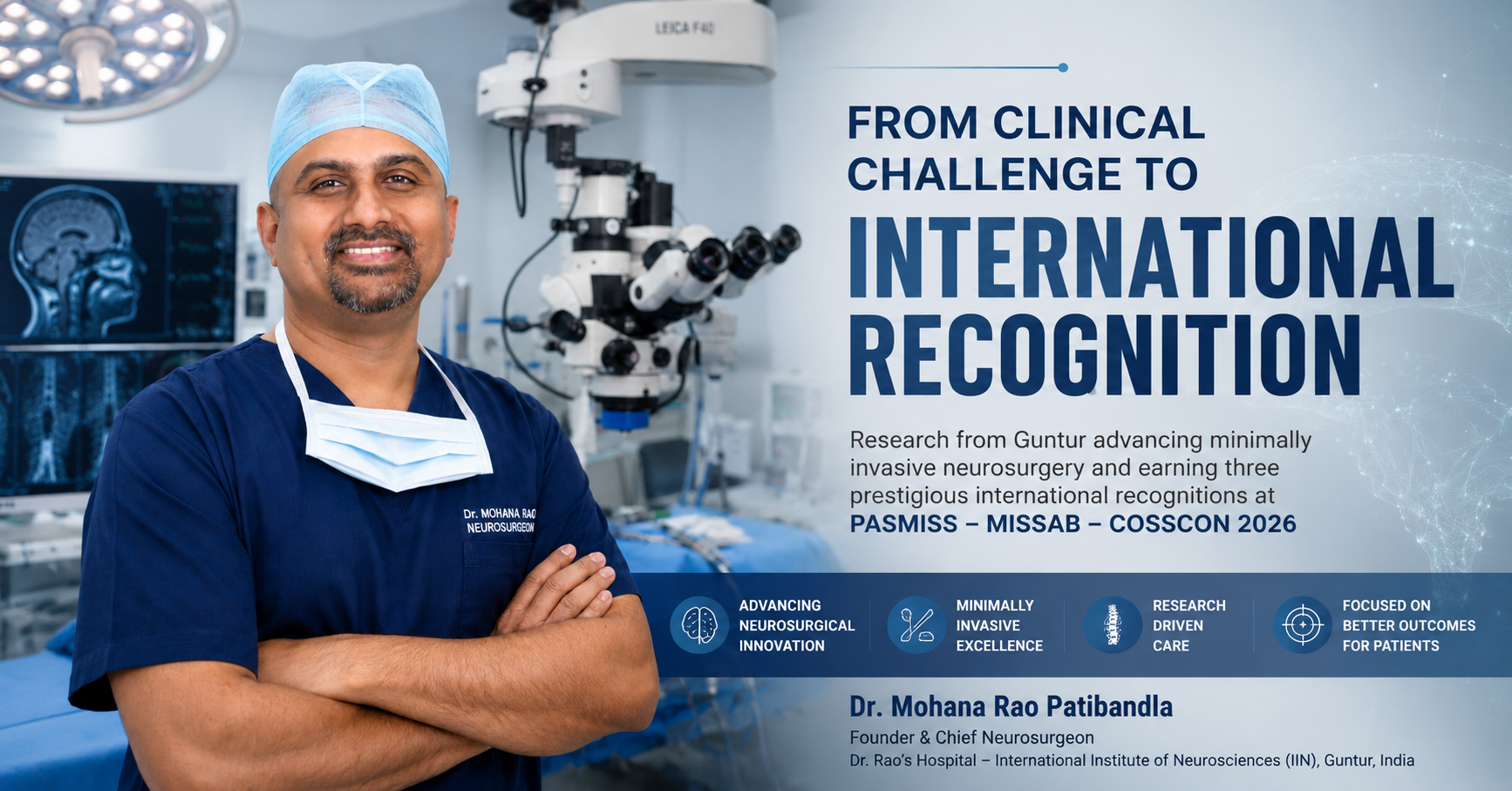
Dr. Rao in a modern neurosurgical operating room, highlighting research from Guntur in minimally invasive neurosurgery and its international scientific recognition at PASMISS–MISSAB–COSSCON 2026.
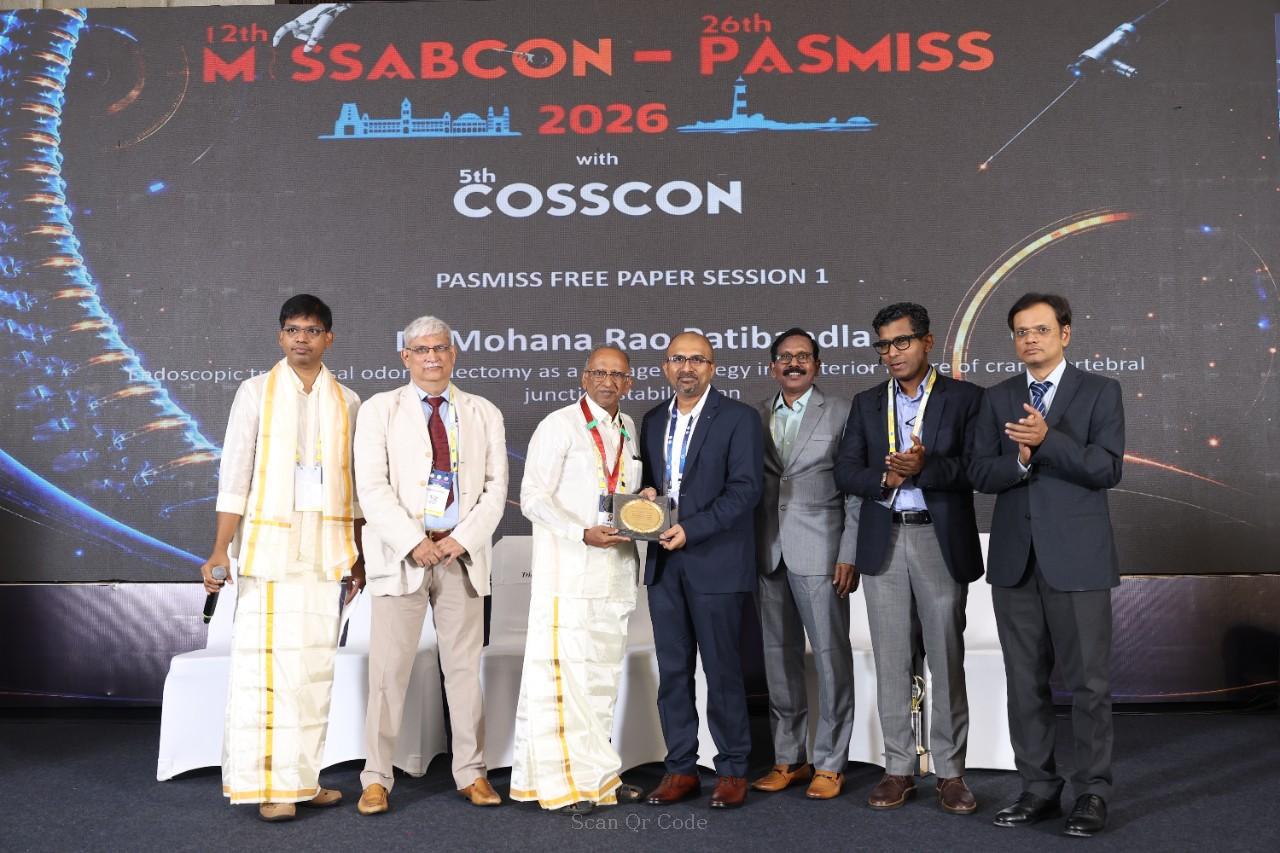
Dr. Rao receives scientific recognition for his research presentation at the PASMISS–MISSABCON–COSSCON 2026 meeting in Chennai, highlighting his contribution to minimally invasive neurosurgical research.
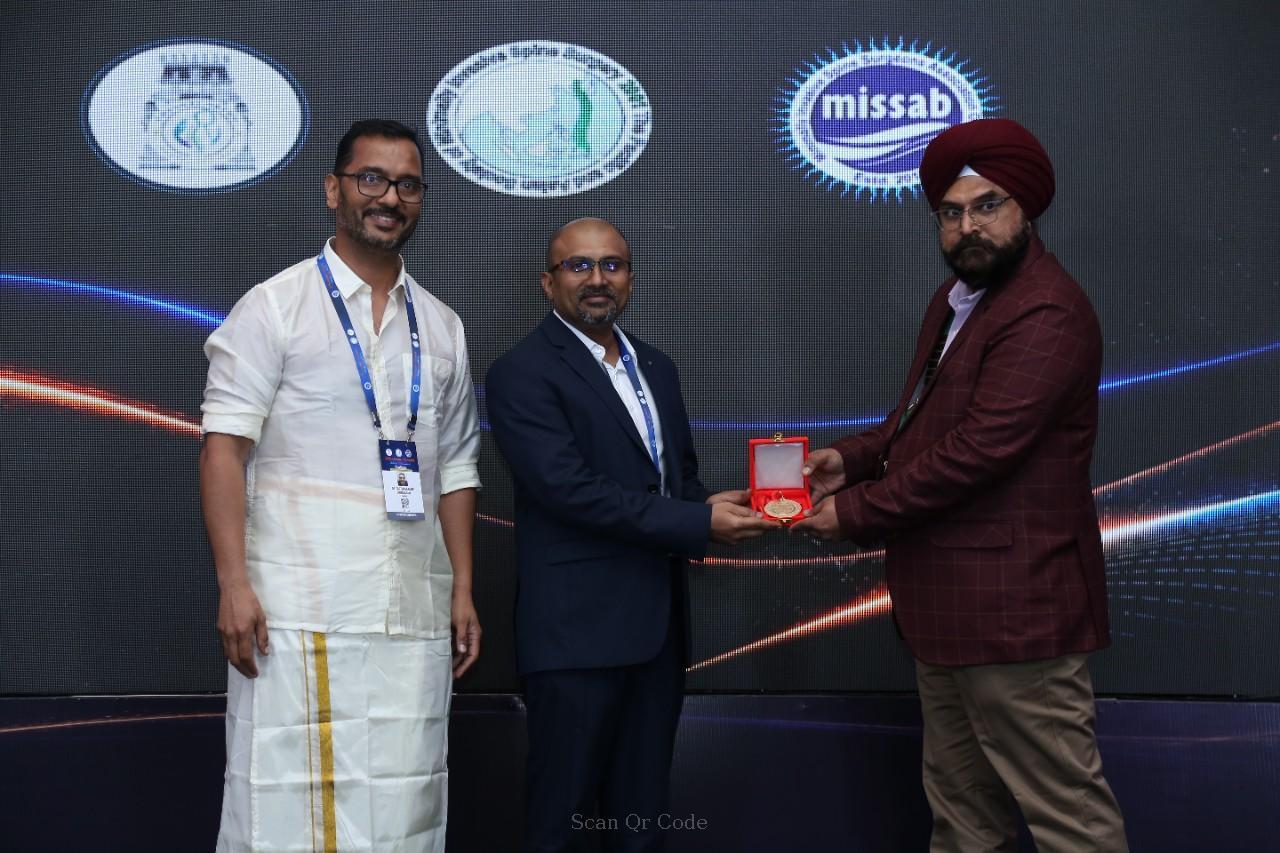
Dr. Rao receives the COSSCON 2026 Best Paper Gold Medal in recognition of his scientific research presentation at the PASMISS–MISSABCON–COSSCON 2026 meeting in Chennai.
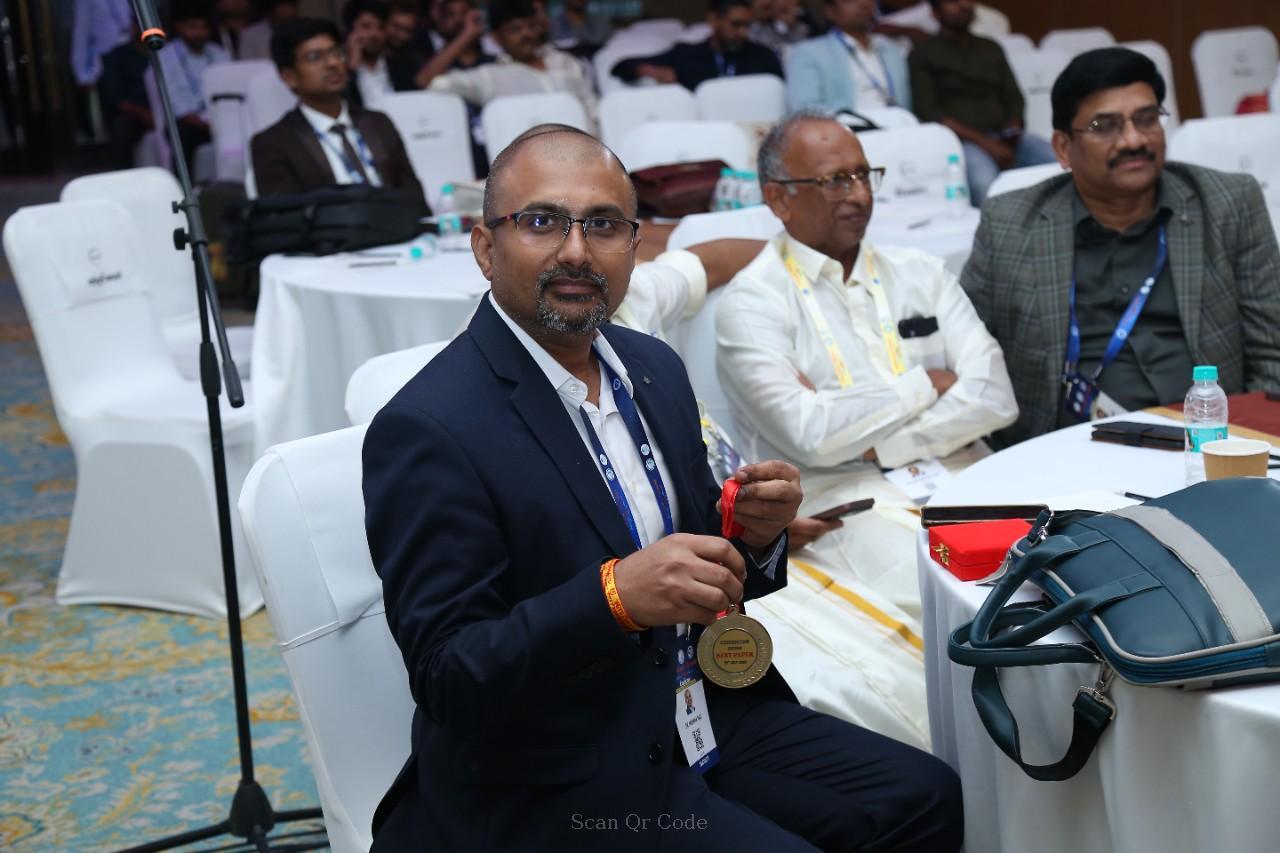
Dr. Rao displays the COSSCON 2026 Best Paper Gold Medal to the press following the scientific recognition of his neurosurgical research at the PASMISS–MISSABCON–COSSCON 2026 meeting in Chennai.
From Clinical Challenge to International Recognition: How Research from Guntur led by Dr. Mohana Rao Patibandla Is Advancing Minimally Invasive Neurosurgery
Research presented at PASMISS–MISSABCON–COSSCON 2026 received three scientific recognitions after exploring a minimally invasive strategy for a complex craniovertebral junction problem.
A neurosurgical research project from Guntur, Andhra Pradesh, has received international scientific recognition after being presented at the PASMISS–MISSABCON–COSSCON 2026 scientific meeting in Chennai, highlighting the growing contribution of Indian clinicians and regional neuroscience centres to advanced surgical research. The research, presented by Dr. Mohana Rao Patibandla (Dr. Rao), Founder and Chief Neurosurgeon of Dr. Rao's Hospital – International Institute of Neurosciences (IIN), Guntur, received three separate scientific recognitions: the PASMISS Best Free Paper Award, MISSAB Best Free Paper Award and COSSCON Best Paper Gold Medal. Medical Dialogues has independently reported the three-award achievement and the research presented at the conference.
The recognition has also generated wider media attention, with the achievement subsequently appearing across national and regional news platforms, including The Hindu, Mid-Day, The Tribune, SiliconIndia, Republic World, Business Standard, The Hans India and LatestLY.
Rather than being simply an award story, however, the research highlights a larger question facing modern neurosurgery:
Can we approach difficult surgical problems differently when conventional strategies present significant challenges?
From a Difficult Clinical Problem to Research
Some of the most challenging problems in neurosurgery occur around the craniovertebral junction, the area where the skull meets the upper cervical spine.
This region contains the lower brainstem, upper spinal cord, important nerves and major blood vessels. Disorders affecting the area can therefore require highly specialised treatment and careful surgical planning.
The challenge can become greater when a patient has already undergone previous treatment and continues to have a structural or neurological problem requiring further intervention.
For the surgeon, such cases can lead to an important clinical question: Can a carefully selected minimally invasive approach provide an alternative route to the affected area while avoiding unnecessary disruption of surrounding tissues?
That question became the basis for the research presented by Dr. Rao and his team.
Why Minimally Invasive Neurosurgery Matters
Minimally invasive neurosurgery is sometimes misunderstood as simply performing a smaller operation through a smaller incision.
The concept is broader.
The objective is to reach the area requiring treatment through an appropriate surgical corridor while minimising unnecessary disruption of healthy tissue, provided that the approach is suitable for the individual patient.
In complex craniovertebral junction conditions, choosing an appropriate route requires detailed imaging, anatomical understanding, surgical experience and careful patient selection.
Modern technologies—including endoscopy, advanced imaging, neuronavigation and intraoperative monitoring—can support this process, but technology alone does not determine whether an operation is appropriate.
Clinical judgment and evidence remain central.
From Operating Room to Scientific Conference
The research was presented during the 26th PASMISS Annual Meeting, conducted as part of MISSABCON–PASMISS 2026 with COSSCON, held from 23–26 July 2026 in Chennai.
Scientific meetings provide clinicians with an opportunity to present original work, discuss surgical experiences and subject new ideas to professional scrutiny.
For specialised and relatively uncommon conditions, this sharing of knowledge is particularly important. Individual centres may encounter only a limited number of complex cases, but collaboration and scientific communication enable surgeons across institutions and countries to learn from one another.
The research from Guntur therefore moved beyond an individual operating room and into a broader scientific discussion.
Three Independent Scientific Recognitions
The subsequent recognition by three professional scientific organisations is significant because the research was evaluated within specialist scientific forums rather than being recognised simply as a personal or institutional achievement.
The study received the:
PASMISS Best Free Paper Award
MISSAB Best Free Paper Award
COSSCON Best Paper Gold Medal
The three recognitions provide independent professional validation of the scientific interest generated by the work.
For Dr. Rao, however, the significance extends beyond the medals.
"The real value of research is not the award. It is the knowledge we create from difficult clinical problems and the possibility that this knowledge can improve care for future patients." — Dr. Rao
Why This Matters for Indian Healthcare
The achievement also reflects a broader transformation taking place within India's healthcare ecosystem.
For many years, large metropolitan academic institutions concentrated sophisticated clinical research primarily in their facilities. Increasingly, specialised healthcare centres in regional cities are developing the infrastructure, expertise and research culture required to participate in national and international scientific forums.
Guntur provides one example of this changing landscape.
The ability of a regional neuroscience centre to present specialised research at an international scientific meeting—and to receive recognition from multiple professional societies—illustrates how the geography of medical innovation is expanding.
The implications extend beyond professional recognition.
Research-led hospitals can systematically evaluate clinical outcomes, identify areas for improvement, test new approaches and contribute their findings to the wider medical community.
This creates a cycle in which clinical experience generates research questions, research generates evidence, and evidence informs future patient care.
Technology Supports the Transformation
The evolution of minimally invasive neurosurgery has occurred alongside major technological advances.
High-resolution imaging provides increasingly detailed anatomical information. Neuronavigation can assist with operative planning and orientation. Endoscopic systems can provide access through narrow corridors in selected procedures. Intraoperative neurophysiological monitoring can help clinicians assess neurological function during complex surgery.
Artificial intelligence and data-driven tools are also beginning to influence surgical planning, medical imaging and clinical decision-making.
Yet technology must remain a tool rather than the objective.
"Technology can expand what is possible, but research tells us when and how it should be used," said Dr. Rao. "The combination of clinical judgment, scientific evidence and appropriate technology is what allows neurosurgery to progress responsibly."
The Importance of Research-Led Hospitals
The recognition of the Guntur research comes at a time when healthcare institutions increasingly need to demonstrate more than just infrastructure and clinical volume.
A modern research-orientated hospital must create an environment where clinicians can:
Study clinical outcomes.
Identify recurring challenges.
Develop research questions.
Evaluate new approaches.
Present findings to peers.
Learn from international experience.
Translate validated evidence into clinical practice.
Such a culture can strengthen both clinical quality and institutional credibility.
For patients, the ultimate value is not the publication or award itself. It is the possibility that systematic research can lead to better-informed treatment decisions for future patients.
From Guntur to the International Scientific Community
The growing visibility of research from regional Indian centres also has implications for India's position in global healthcare.
India has already gained international recognition for its large pool of medical professionals, advanced tertiary-care capabilities, and comparatively cost-effective healthcare.
The next stage of India's healthcare development can increasingly involve creating medical knowledge as well as delivering medical services.
Research emerging from cities such as Guntur contributes to that transition.
The recognition received at PASMISS–MISSABCON–COSSCON 2026 is therefore best understood not simply as a personal milestone, but as an example of how specialised clinical research from India can enter international scientific conversations.
What Comes After Recognition?
Scientific recognition is not the end point of research.
The more important questions come afterward:
Can the findings be reproduced?
Can the approach be evaluated in larger patient groups?
Can other surgeons learn from the experience?
Can the technique ultimately improve outcomes for appropriately selected patients?
These questions are what allow promising ideas to develop into reliable medical knowledge.
For Dr. Rao, that continuing process is central to the purpose of clinical research.
"Every difficult patient presents an opportunity to learn. Our responsibility is to study those challenges carefully, share what we learn and continue refining our approach based on evidence." — Dr. Rao
A Larger Shift in Indian Neurosurgery
The journey from a difficult clinical problem in Guntur to presentation before an international specialist audience represents more than one research project.
It reflects a changing model of healthcare in which clinical excellence, technology, research and education increasingly operate together.
As Indian healthcare continues to develop, the institutions that contribute not only to patient care but also to scientific knowledge will play an increasingly important role in shaping the future of medicine.
For patients, the message is ultimately simple:
Medical progress begins when difficult questions are not ignored—and when those questions are pursued through careful research, scientific evaluation and responsible innovation.
About Dr. Mohana Rao Patibandla (Dr. Rao)
Dr. Mohana Rao Patibandla (Dr. Rao) is Founder and Chief Neurosurgeon of Dr. Rao's Hospital – International Institute of Neurosciences (IIN), Guntur, Andhra Pradesh, India. His clinical and academic interests include minimally invasive brain and spine surgery, skull base surgery, cerebrovascular and endovascular neurosurgery, neuro-oncology, pediatric neurosurgery, stereotactic radiosurgery and intraoperative neurophysiological monitoring.
About Dr. Rao's Hospital – International Institute of Neurosciences
Dr. Rao's Hospital – International Institute of Neurosciences (IIN) is a dedicated neuroscience centre in Guntur providing specialised care for brain, spine and nervous-system disorders, integrating advanced neurosurgical technology, minimally invasive treatment, neurocritical care, endovascular procedures and clinical research.
Media Contact
Dr. Rao's Hospital – International Institute of Neurosciences (IIN)
Guntur, Andhra Pradesh, India
Phone: +91 90100 56444
Email: info@drraoshospitals.com
Website: Dr. Rao's Hospital
Mohana Rao Patibandla
Patibandla Narayana Swamy Neurosciences LLP
+ +91 90100 56444
info@drraoshospitals.com
Visit us on social media:
LinkedIn
Instagram
Facebook
YouTube
X
Dr. Rao's Hosptial - the best neurosurgery hospital in India - with medical tourism
Legal Disclaimer:
EIN Presswire provides this news content "as is" without warranty of any kind. We do not accept any responsibility or liability for the accuracy, content, images, videos, licenses, completeness, legality, or reliability of the information contained in this article. If you have any complaints or copyright issues related to this article, kindly contact the author above.
